The Reading Room
Ideas · page 18
Browse by topic, search for a question or follow a worked example. Return to the book with its chapter companion and discussion guides.
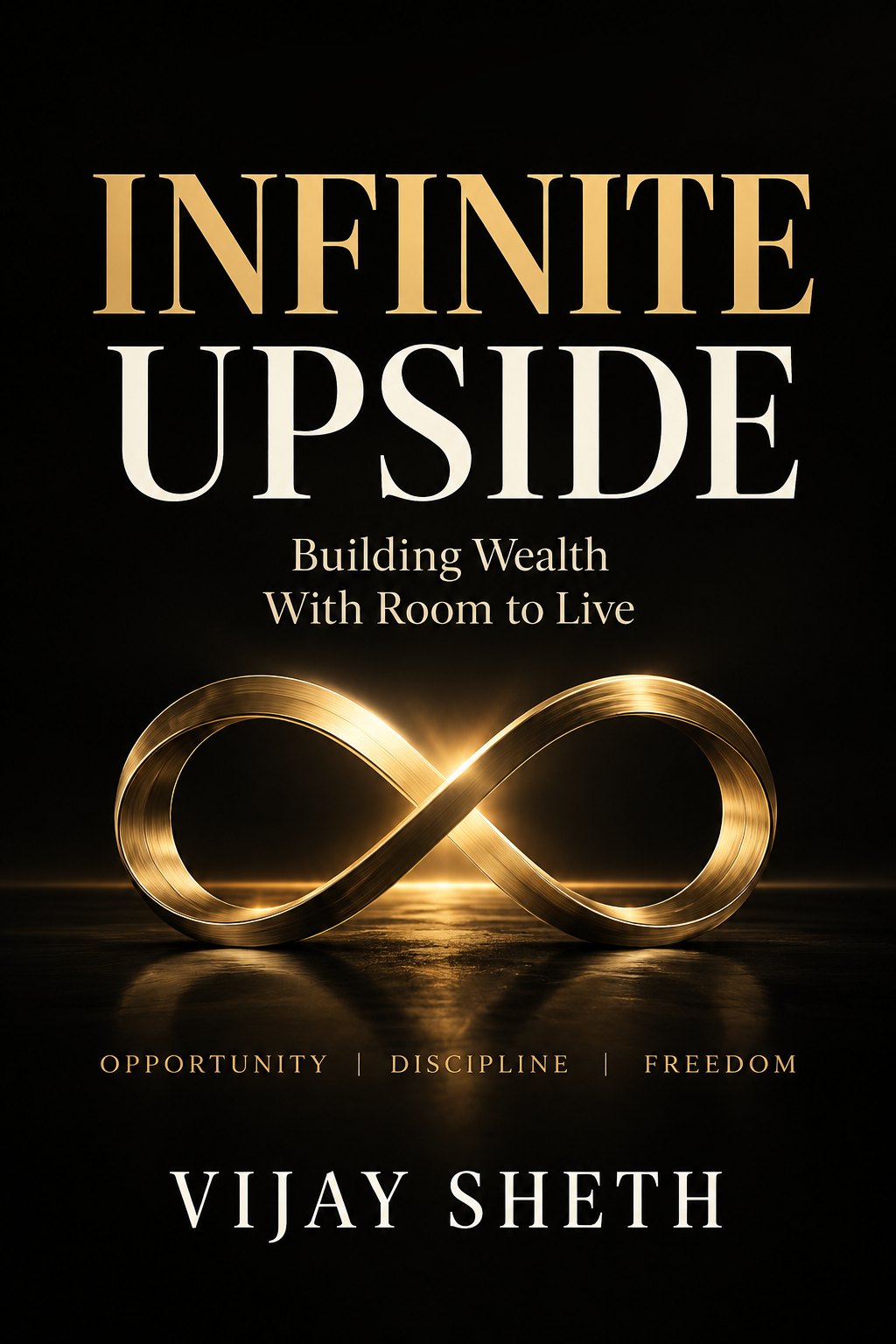
Browse original essays and worked financial examples on money, running a company and the life around it. Some pieces return to Infinite Upside; others explain a term or calculation through an invented record. Chapter questions and discussion plans are available in the book companions.
Start with a question
Browse by topic.
Follow a question through a curated set of readings, or browse individual articles below.
Money, timing and the next commitment
Look past the attractive figure. Follow what is earned, what can be used and when the next promise comes due.
Follow the readingsWork and peopleA company other people can run
Make standards clear, teach the judgment behind them and give people the information and authority to finish the work.
Follow the readingsRoom to liveAmbition with a life around it
What do you want to keep possible while you build?
Follow the readingsSearch results
No matching readings yet. Try a broader question, or choose a reading path.
Money and decisions
Follow the cash, the timing and the commitments behind an attractive opportunity.
Model incentives when effort is hard to observe
An attractive agreement and an incentive to choose a particular action are separate tests.
Read onMarkets in contextWhat does a Treasury auction “tail” mean?
One auction, two yields, and a term that does not always mean the same subtraction.
Read onHotels and business decisionsHow to evaluate a hotel group booking
A full room block can be a great deal. The useful question is what else those rooms might have earned.
Read onPricing and recurring revenueHow to Forecast a Subscription Price Increase at Renewal
A higher renewal price does not arrive all at once—and the customer count may change along the way.
Read onProperty and business decisionsIs a sale-leaseback worth it? Follow the cash, rent and control
The sale brings cash today. The lease changes the obligations that follow.
Read onProperty and business decisionsHow to review a construction change order
A change can improve a project. Follow the price, timing and work around it before you agree.
Read onStartup financing and ownershipHow does a liquidation preference change a startup sale payout?
An investor’s ownership percentage is only one part of the answer. The financing terms decide how the proceeds are divided.
Read onHospitality and operationsHow to evaluate restaurant menu items beyond food-cost percentage
A lower food-cost percentage is one clue. The rest of the story involves dollars, demand and the kitchen.
Read onHotels and business decisionsAre direct hotel bookings more profitable than OTA bookings?
A direct booking can cost less to acquire. The comparison gets more interesting when you include demand and the full cost of the stay.
Read onBusiness logistics and decisionsHow to Compare Parcel Shipping Quotes Beyond the Base Rate
A cheaper label can tell only part of the story. Price the same packages through the whole trip.
Read onInvesting and market mechanicsMarket vs. limit orders: what happens to your trade?
One order type leaves the price open. The other can leave the trade unfinished. Here is what that means in practice.
Read onProperty and operating decisionsUsable vs. rentable square feet: compare office leases
The advertised rate is only useful when you know which square footage it applies to.
Read onMarketing and business decisionsROAS vs. incrementality: did the ads create those sales?
A sale credited to an ad and a sale caused by an ad are different numbers.
Read onFinancing and ownershipPrimary vs. secondary share sales: where does the money go?
An investor’s total check can have two destinations. The difference changes the company’s cash and the cap table.
Read onMarkets and ownershipDo stock buybacks create value or just raise EPS?
Fewer shares can raise a per-share number. The price paid and the cash left behind matter too.
Read onRetail and business operationsWhat do product returns really cost a business?
A refund is only one part of the calculation. The product and the costs have their own return journey.
Read onProperty and financial decisionsWhat Happens to an Earnest Money Deposit?
Follow the deposit from the offer to closing—or through the questions that arise if the deal ends.
Read onCash and operating decisionsCash conversion cycle: a working-capital example
The sale can be profitable while the business is still waiting for cash. Follow the gap.
Read onRetail and business operationsInventory turnover vs. sell-through: what each number tells you
One ratio follows inventory value. The other follows a defined group of units. Both need a clear denominator.
Read onHospitality and event planningHow Does an Event Food-and-Beverage Minimum Work?
The minimum is one number. The final event bill may include several more.
Read onCredit and everyday decisionsWhy did my credit card charge interest after I paid in full?
A statement closes on one date. Interest and payments can continue on another. Here is how to trace the difference.
Read onProperty and investingWhat does a commercial property cap rate actually tell you?
A rate can summarize a property’s income and price. The assumptions underneath it determine how useful it is.
Read onProperty and financial decisionsAssessed value vs. taxable value: how is property tax calculated?
The sale price, assessed value and tax bill answer different questions. Follow the steps that connect them.
Read onCommercial property and business decisionsHow Does a Tenant-Improvement Allowance Work?
The landlord’s maximum allowance is only one number. Follow eligible work, payment timing and the tenant’s actual share.
Read onHospitality and financeHow to calculate hotel break-even occupancy
Occupancy is only one part of the answer. Follow the rate, the costs and the nights available.
Read onHospitality and business operationsDoes Offering EV Charging Make Sense for a Business?
Follow the guest fee, electricity bill and peak demand before calling a charging port profitable.
Read onCars and financial decisionsLease vs. buy a car: compare the same three years
A monthly payment and a purchase price describe different things. Put them on the same timeline before deciding.
Read onProperty and business decisionsFree rent vs. lower rent: compare commercial leases
The first few months matter. So do the payments after the concession ends.
Read onBusiness finance and accountingDeferred revenue vs. cash received: why the numbers differ
A customer can pay today for a promise that takes months to fulfill. The bank balance and revenue tell different parts of the story.
Read onInvesting and financial decisionsBitcoin or a Spot Bitcoin ETP: What Is the Difference?
Price exposure can look similar on a screen. Ownership, custody and costs tell a different story.
Read onMoney and everyday decisionsCredit union vs. bank: how should you compare accounts?
Both can handle everyday banking. The better account depends on the terms and services you will actually use.
Read onMarkets and expectationsWhy can a stock fall after an earnings beat?
A strong quarter and a changed outlook can tell different stories at the same time.
Read onHome financing and decisionsAre Mortgage Discount Points Worth Paying?
A lower rate has an upfront price. Compare the cash today with the loan you might actually keep.
Read onSaving and financial decisionsTreasury bill vs. bank CD: how do you compare them?
One is a government security; the other is a bank deposit. Put the cash, dates and access rules on the same page.
Read onMarkets and investingWhy can dividend yield rise when a stock falls?
A higher percentage can come from a lower share price, not a larger payment.
Read onHotel finance and operationsHotel RevPAR, TRevPAR and GOPPAR: What Each Number Shows
A busier hotel can earn more revenue and still retain less operating profit. Follow the numbers behind the stay.
Read onMarkets and home financingWhy a Fed Rate Cut May Not Lower Mortgage Rates
The policy rate and a 30-year mortgage quote are different rates, even when the headlines arrive together.
Read onBusiness cash and operationsHow to account for gift-card sales and redemptions
The money can arrive months before the work. Keep the customer promise in the picture.
Read onBusiness property and decisionsHow do you evaluate a commercial-lease renewal option?
The lease end date and the renewal deadline may be months apart. Plan around both.
Read onConstruction and business financeHow do you review a construction draw request?
A request, an approval and money in the account are different milestones.
Read onMoney and consumer decisionsHow do you dispute a credit-card billing error?
A case number is useful. A written notice, a deadline and an organized record do more.
Read onTravel and spending decisionsHow do you compare hotel prices with resort fees and taxes?
Start with the same trip. Then add the charges and conditions that change the price.
Read onTechnology and infrastructureWhat does data-center PUE actually measure?
A better infrastructure ratio is useful. It does not answer every question about energy, computing or cost.
Read onCommercial property and business decisionsShould you appeal a commercial property tax assessment?
A higher bill is a reason to investigate. The assessment, evidence and local process determine the next step.
Read onMarkets and investingHow do you evaluate a stock tender offer?
The offered price is only one part of the transaction. Check how many shares may actually be purchased, and when.
Read onInvesting and brokerage accountsHow does fully paid securities lending work?
A lending payment comes with a loan agreement. Read both.
Read onBusiness property and decisionsCommercial lease assignment vs. sublease: what changes?
Another business can take the space without taking every obligation off your hands.
Read onTravel and money decisionsHow do you evaluate a timeshare or vacation-club offer?
The vacation may be appealing. Make sure the years of fees and reservation terms work for you too.
Read onBring the question back to the book.
The chapter companion offers prompts for all seventeen chapters, and the book-club plan makes room for readers who come to different conclusions.
Open the Reader’s Guide